
Wire EDM vs. Sinker EDM: Differences, Applications and Selection Tips
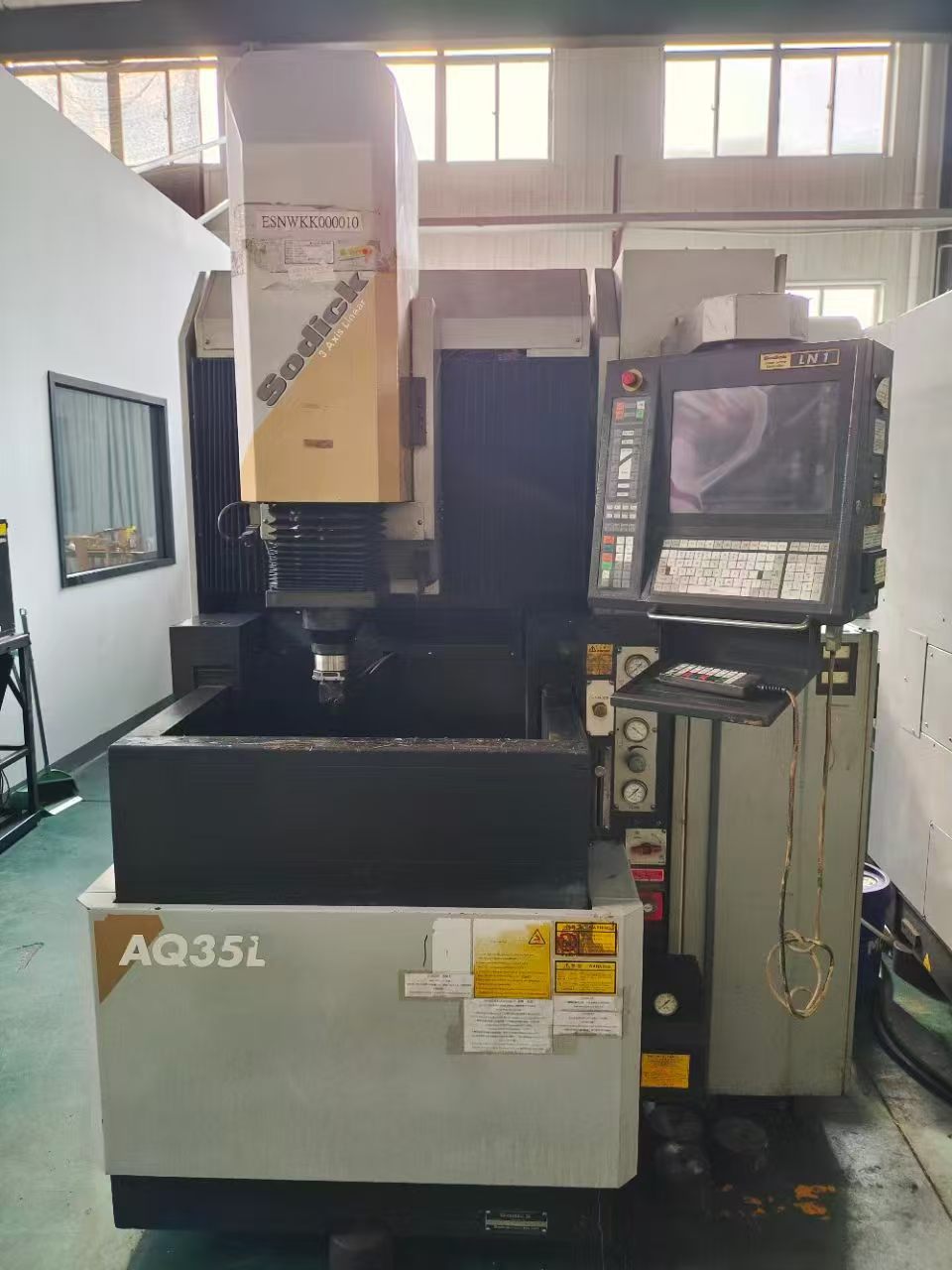
The deciding factor in Wire EDM vs Sinker EDM is the required geometry: wire EDM cuts through profiles, while sinker EDM forms cavities using a shaped electrode. A mold may need both processes for different features; they are not directly interchangeable.
Match the process to the required geometry
Both processes remove electrically conductive material through controlled electrical discharges across a gap filled with dielectric fluid. Wire EDM feeds a moving wire electrode along a programmed path, typically in deionized water. Sinker EDM advances a shaped electrode into the workpiece, commonly in dielectric oil.
| Selection factor | Wire EDM | Sinker EDM |
|---|---|---|
| Geometry | Through contours, slots and tapers | Blind cavities, ribs and recessed details |
| Tooling | Consumable wire; internal profiles need a start hole or existing opening | Custom copper or graphite electrodes, with wear compensation |
| Typical workpieces | Punches, die inserts and extrusion dies | Injection mold cavities and detailed mold inserts |
| Geometric limits | Wire diameter, discharge gap and guide access | Electrode geometry, discharge gap and flushing access |
Check material and accuracy requirements
Tool steel, carbide and conductive alloys can be candidates for either process. Hardness alone does not determine suitability, so hardened mold components can often be machined after heat treatment. Conventional EDM requires electrical conductivity; ordinary insulating ceramics and plastics are unsuitable.
Neither process has a universal accuracy advantage. Wire EDM results depend on wire deflection, workpiece thickness, thermal stability, flushing and skim passes. Sinker EDM accuracy depends on electrode manufacture, wear, gap control and finishing strategy. Small internal corner radii remain constrained in both processes.
Specify dimensional tolerance, surface finish and permissible recast layer separately. EDM creates a thermally affected surface; fatigue-sensitive tooling may require finishing or surface-integrity verification.
Select equipment around the actual job
For wire EDM, check workpiece height and weight limits, axis travel, taper capability, threading access and submerged cutting arrangements. For sinker EDM, check tank clearance, electrode travel, electrode changing, orbiting capability and dielectric management.
Compare total process cost: wire EDM consumes wire and may require multiple skim passes; sinker EDM adds electrode design, manufacture and replacement. Deep, narrow cavities also make debris evacuation a critical feasibility check.
When assessing used equipment, request a representative test cut with dimensional and finish measurements. Verify generator condition, axis behavior, filtration and service support rather than relying on catalog accuracy alone.
Buyer questions
Which process is better for moldmaking?
Use wire EDM for through-cut inserts and die profiles; use sinker EDM for blind cavities and recessed details. Select by feature, even within one mold.
Can wire EDM produce a blind pocket?
Conventional wire EDM requires the wire to pass through the workpiece. A blind pocket generally calls for sinker EDM.
How should a tight tolerance be verified?
Request a test using representative material, thickness, geometry and finishing passes, with an agreed measurement method and temperature conditions.
More Articles
-
Is This Used Makino EDGE2 EDM available for inspection?Yes. This used Makino EDGE2 EDM appears ready for buyer inspection because the listing already provides a stock number, exact location in China, origin, model, year, and working dimensions. That gives a serious buyer enough concrete information to compare fit, arrange a visit, and decide whether the machine is worth immediate review for production or tooling work. What makes this EDGE2 easy to evaluate quickly? For buyers who do not want to waste time on incomplete listings, this machine gives several practical checkpoints upfront. It is identified as stock number 812574, branded Makino, model EDGE2, made in Japan, and located in China. It is also listed as a 2012 machine. That combination helps a purchasing team move directly into fit evaluation instead of first asking basic identification questions. Stock Number 812574 Brand / Model Makino EDGE2 Origin Japan Year 2012 Rapid Traverse 5000 mm/min From a buying decision standpoint, that matters because inspection readiness is not only about whether a machine exists in stock, but whether the listing contains enough detail to justify internal approval for the next step. Here, it does. A buyer can already match the machine to expected workpiece size, setup space, and process type before arranging travel or requesting more media. Do the specifications support a practical purchase decision? Yes, especially if your shop handles small to medium EDM jobs across multiple industries. The listed three-axis travel is 300 x 250 x 350 mm, the tank size is 660 x 457 x 305 mm, and the table size is 500 x 350 mm. Those numbers give a clear starting point for deciding whether your current fixtures, electrodes, and part sizes fit without forcing a speculative inquiry. This is where the Makino EDGE2 works as a versatile all-rounder rather than a machine tied to one narrow program. A shop serving automotive components may use it for repeat cavity or insert work. Aerospace suppliers may consider it for precise smaller geometry. Mold making shops can review it for core and cavity operations. Medical device and electronics manufacturers may also see value if their parts fall within the stated travel and table limits. In other words, one machine can cover many applications as long as your required envelope fits inside the published dimensions. The note that there is no tool magazine is also useful, not negative by itself. It simply tells the buyer to judge the machine on the actual workflow intended. If your operation depends on unattended electrode changes, that is a key inspection question. If your work is shorter-run, setup-driven, or manually managed, the simpler configuration may still fit well. What should a buyer check on site before negotiating? An on-site inspection should focus on the exact facts already listed. First, verify full axis movement across the stated 300 x 250 x 350 mm travel. Second, inspect the 660 x 457 x 305 mm working tank and the 500 x 350 mm table for condition, wear, and suitability for your normal fixtures. Third, confirm the current machine configuration since the listing states there is no tool magazine. Fourth, review how the 5000 mm/min rapid traverse fits your expected setup and movement requirements. Because the machine is already located in China, local and regional buyers can often move faster from shortlist to inspection. That can strengthen negotiation because you are evaluating a specific in-stock unit, not a generic model description. The strongest purchase question here is not whether the EDGE2 is broadly usable; the listed specs already show that it can fit automotive, aerospace, mold making, medical devices, and electronics work. The real question is whether this particular machine's envelope, configuration, and location align with your parts and your timeline. Based on the listing detail, it is ready for that decision stage now. Related Questions Can buyers verify this Makino EDGE2 quickly before making an offer? Yes. The listing includes stock number 812574, China location, model, origin, year, and working dimensions, which is enough to begin a serious inspection process. What jobs fit this used Makino EDGE2 EDM best? It fits small to medium EDM work where a 300 x 250 x 350 mm travel and 500 x 350 mm table meet the part and fixture requirements. Does the machine suit one industry only? No. Its size and configuration can suit automotive, aerospace, mold making, medical devices, and electronics when the application stays within the listed envelope. What is the key inspection point before negotiating? The key point is confirming that the actual travel, tank, table, and no-tool-magazine setup match your production method and job mix.

-
Used Sodick AD30LS Sinker EDMStock Status: This premium 2014 Japanese-made Sodick AD30LS Sinker EDM (Stock No. 812337) is currently in stock at our warehouse and ready for immediate on-site inspection. Featuring a highly rigid design, an X/Y/Z axis travel of 320 × 200 × 288 mm, and a maximum workpiece weight capacity of 550 kg, this versatile machine is engineered to deliver sub-micron accuracy for demanding mold-making, aerospace, automotive, and medical device manufacturing operations. Read on to evaluate how this high-performance machine fits your production requirements. Stock Status and buying value In the precision tooling and mold-making industries, Sodick is a globally recognized benchmark for electrical discharge machining (EDM) excellence. This particular used Sodick AD30LS Sinker EDM represents a strategic procurement opportunity for manufacturers looking to upgrade their precision capabilities without the steep capital expenditure or long lead times associated with brand-new machinery. Manufactured in Japan in 2014, this machine has been meticulously preserved and is located in the industrial hub of Dongguan, China. Unlike standard pre-owned machinery, Sodick's legendary build quality ensures that key mechanical components retain their structural integrity over long-term operation. By choosing a high-caliber Japanese die sinker from our current stock, you bypass the typical 3-to-6-month factory waiting period, allowing you to integrate this machine into your production line and generate return on investment immediately. Our team has secured this unit under Stock No. 812337. It is fully assembled, powered, and ready for physical or virtual inspection. For facilities processing complex cavities, hardened tool steels, or intricate electrode geometries, this machine provides the exact discharge stability and positioning accuracy required to meet tight modern tolerances. Key Specifications and Production Readiness To determine if this machine matches your current tooling setups and part dimensions, it is essential to analyze its physical and technical parameters. Below is the complete technical profile for the 2014 Sodick AD30LS: Technical Parameter Specification Value Production Significance Stock Number 812337 Unique identifier for tracking and inspection requests Brand / Manufacturer Sodick (Japan) Industry-leading discharge control and mechanical rigidity Model AD30LS Highly popular linear-motor-driven design for versatile applications Year of Manufacture 2014 Modern control interface with optimized energy consumption Current Location Dongguan, China Accessible for rapid regional shipping and on-site testing X / Y / Z Axis Travel 320 × 200 × 288 mm Ideal for small-to-medium precision mold inserts and cavities Work Tank Internal Dimensions 895 × 584 × 288 mm Spacious area for secure workpiece clamping and dielectric fluid rise Worktable Dimensions (W × D) 600 × 400 mm Accommodates standard mold bases and multi-cavity fixtures Maximum Electrode Weight 50 kg Supports heavy, complex copper or graphite electrode assemblies Maximum Workpiece Weight 550 kg Heavy-duty table construction handles substantial steel blocks with ease Machine Dimensions (W × D × H) 2239 × 2248 × 2345 mm Compact footprint optimized for space-constrained toolrooms The technical configuration of the Sodick AD30LS is specifically tailored to balance high-load capacity with delicate, micro-level precision. The 550 kg workpiece capacity ensures that heavy mold plates can be clamped securely without causing table deflection or compromising the alignment of the X and Y axes. Meanwhile, the 320 × 200 × 288 mm travel envelope is perfectly proportioned for high-density connector molds, multi-cavity plastic injection tooling, and progressive stamping die components. Frequently Asked Questions Is the Sodick AD30LS currently available for physical inspection? Yes, this machine (Stock No. 812337) is fully assembled and located at our warehouse . We welcome your technical team or a third-party inspector to conduct a physical evaluation. Virtual inspections via live video calls can also be arranged upon request. What is the maximum workpiece size that can fit in the work tank? The work tank internal dimensions are 895 × 584 × 288 mm. When planning your setup, ensure that your workpiece, clamping fixtures, and electrode movement fit comfortably within these dimensions while allowing adequate space for dielectric fluid submersion and circulation. How does the 550 kg workpiece weight limit affect heavy mold blocks? The 550 kg capacity is a testament to the heavy-duty, rigid casting of the Sodick AD30LS. It allows you to place large, dense tool steel blocks on the 600 × 400 mm table without causing mechanical deflection, ensuring that high-precision positioning is maintained even at maximum load. Are there any shipping or customs clearances already completed? The machine is currently stored in Dongguan, China. We can assist with all necessary export documentation, packing, and loading onto your preferred transport carrier. Please contact us to discuss shipping logistics to your specific location. What makes a 2014 Sodick AD30LS a better purchase than a cheap new EDM? Sodick machines are engineered to incredibly high standards in Japan, utilizing superior casting, linear drives, and discharge control algorithms. A used 2014 Sodick will consistently deliver better positioning accuracy, superior surface finishes, faster machining speeds, and a longer operational lifespan than a brand-new, low-cost entry-level alternative.

-
Used Sodick AP200L EDM | In Stock & available for inspectionThis used Sodick AP200L EDM (Stock ID: 811799) is currently in stock and available for immediate inspection. Engineered for high-precision electrical discharge machining, this unit features a compact footprint with X/Y/Z travels of 220 × 150 × 120 mm. It is a cost-effective, reliable solution for shops requiring immediate capacity for mold insert production, micro-machining, or intricate cavity work. Bypass standard OEM lead times and integrate this machine into your production line immediately. Stock Status and buying value In today’s manufacturing environment, securing reliable EDM capacity is a distinct competitive advantage. This Sodick AP200L is physically in stock, allowing you to bypass long manufacturing lead times. Acquiring this used unit is a low-risk capital investment for shops looking to add a dedicated EDM station without the overhead costs associated with purchasing new equipment. Key Specifications and Production Readiness The AP200L is purpose-built for precision, not high-volume roughing. Its specifications are optimized for intricate work where dimensional tolerance is critical. Specification Detail Brand Sodick Model AP200L X/Y/Z Travel 220 × 150 × 120 mm Max Spindle Travel 120 mm Max Machining Diameter 150 mm Origin Japan Production Impact: The 220 × 150 × 120 mm travel range is perfectly suited for small-to-medium workpieces. If your production involves electrode-based machining for mold inserts, connector housings, or medical devices, this travel range provides the necessary clearance without wasting floor space on an oversized machine. The 120 mm spindle travel provides ample room for deep cavity sinking while maintaining the rigidity required for superior surface finishes. Target Applications The Sodick AP200L is a versatile workhorse in the sinker EDM category. It is an excellent fit for facilities where precision and repeatability are non-negotiable. Consider this unit if your facility specializes in: Mold & Die: Ideal for producing precision mold inserts, slides, and lifters with complex geometries. Medical Device Manufacturing: Suitable for machining surgical instruments, dental components, and high-tolerance metal parts. Automotive & Electronics: Perfect for creating connectors, micro-switches, and precision components requiring high-definition cavity sinking. Aerospace Components: Useful for small-scale, high-precision parts that demand strict adherence to tolerances. If your current production bottleneck involves waiting for EDM capacity on larger machines, the AP200L serves as the perfect "satellite" unit to offload smaller, high-precision tasks and increase overall shop throughput. Why the AP200L is a Strategic Addition The Sodick AP200L is renowned for its stable discharge circuit technology. For production managers, this machine offers an immediate path to improving output quality. It delivers the "Sodick" standard of EDM performance in a compact footprint, making it an excellent choice for expanding capabilities into complex, small-part machining without the significant capital expenditure of a new unit. With the machine currently in stock, the transition from decision to production can be remarkably fast. Frequently Asked Questions Is the Sodick AP200L currently available for inspection? Yes, this machine (Stock ID: 811799) is currently located in our facility and is available for immediate inspection and power-on testing. What type of production is the AP200L best suited for? The AP200L is a high-precision sinker EDM designed for small-to-medium mold cavities, intricate inserts, and micro-machining tasks where high surface finish and dimensional accuracy are critical. What should I check during an on-site inspection? Key inspection points include the X/Y/Z axis repeatability, the condition of the dielectric fluid system, controller responsiveness, and the state of the spindle assembly. How does this machine compare to larger EDM machines? The AP200L is specialized for smaller workpieces. While it lacks the large travel range of heavy-duty EDMs, it offers superior precision and efficiency for small parts, making it a more cost-effective choice for specific micro-machining applications.

-
Used Sodick AM3LS EDM: A Comprehensive Guide to Precision and Technical ExcellenceSpecifications Value Stock Number 810988 Brand Sodick Model AM3LS Country of Origin Japan 3-Axis Travel (X/Y/Z) 300 * 200 * 250 mm Table Dimensions 600 * 400 mm Max Machining Speed 550 mm/min Work Tank Size 895 * 584 * 288 mm 1. Equipment Overview: Engineering Excellence from Japan The Sodick AM3LS stands as a testament to the pinnacle of Japanese EDM (Electrical Discharge Machining) engineering. Developed for the most demanding precision industries, this model has long been the preferred choice for master toolmakers globally. As a used machine (Stock No. 810988), it retains the core structural integrity and high-fidelity control systems that Sodick is renowned for. The Sodick AM3LS is designed to handle intricate geometries and difficult-to-cut materials with unparalleled accuracy. Its rigid frame and thermal management system are engineered to withstand the rigors of continuous industrial operation while maintaining micron-level precision. For manufacturers looking to bridge the gap between high-volume production and artisanal precision, the Sodick AM3LS offers a reliable, robust, and technologically advanced platform. In the secondary market, this specific unit represents a rare opportunity to acquire high-end Japanese technology at a fraction of the cost of a new machine, making it a strategic acquisition for companies looking to enhance their technical capability without overextending their capital expenditure. 2. Detailed Parameters: Performance by the Numbers The specifications of the Sodick AM3LS are not merely numbers; they represent the machine's capability to solve complex machining challenges. The 3-axis travel of 300 x 200 x 250 mm is optimized for small-to-medium-sized precision molds, such as those used in the smartphone, semiconductor, and medical device industries. This compact work envelope ensures that the machine maintains maximum rigidity and minimizes thermal expansion, which are critical factors in achieving tight tolerances. The table size of 600 x 400 mm provides ample space for sophisticated clamping systems, allowing for multiple workpiece setups and reducing downtime between runs. One of the standout features of this Sodick AM3LS is its maximum machining speed of 550 mm/min. This rapid processing speed is achieved through Sodick's proprietary discharge power supply and advanced control algorithms, which optimize the spark gap and energy delivery. This results in faster material removal during roughing operations while preserving the ability to achieve ultra-fine surface finishes during the finishing stages. The work tank, measuring 895 x 584 x 288 mm, is perfectly scaled to provide efficient dielectric fluid circulation, ensuring optimal flushing of debris and stable discharge conditions. Every parameter of Stock 810988 has been verified to ensure it meets the high standards expected of the Sodick brand, providing a reliable foundation for any precision machining project. 3. Application Cases: Solving Real-World Engineering Problems In the field of high-precision electronics, the Sodick AM3LS is frequently utilized for the creation of multi-cavity connector molds. These molds require extremely fine rib sections and sharp internal corners that are impossible to machine using traditional milling. The Sodick AM3LS excels here, delivering consistent results across hundreds of cavities. In the medical sector, the machine is used to fabricate complex orthopedic implants and surgical instruments made from titanium and other biocompatible alloys. The non-contact nature of EDM allows for the machining of these tough materials without inducing residual stresses or micro-cracks. Furthermore, the aerospace industry relies on machines like the Sodick AM3LS for the production of cooling holes in turbine blades and intricate fuel injection components. The machine's ability to maintain high precision over deep-hole discharges makes it indispensable. By choosing this used Sodick AM3LS, manufacturers gain the ability to compete for high-value contracts in these specialized sectors, leveraging the machine’s proven track record of quality and reliability. It is a versatile workhorse that transitions seamlessly between different industry requirements. 4. Cost-Effectiveness: A Strategic Investment Analysis The financial logic for acquiring a used Sodick AM3LS is compelling. For many manufacturing firms, the initial investment in a brand-new high-end EDM can be prohibitive. A used Sodick AM3LS offers a significantly lower entry point while providing the same technological advantages. From an ROI perspective, the machine typically pays for itself within the first year of operation through high-margin precision work. Additionally, Sodick machines are known for their high resale value, protecting the owner's equity over the long term. By reducing the overhead costs associated with new equipment, companies can allocate more resources to R&D or expansion, while still benefiting from the superior performance of a Japanese-made machine. In short, Stock 810988 represents the perfect balance between technological power and financial prudence. 5. Frequently Asked Questions (FAQ) Q1: What is the expected precision level for this used AM3LS? This unit has been calibrated to maintain a positioning accuracy of within +/- 0.003mm, which is well within the requirements for high-precision mold making and aerospace parts. Q2: Are spare parts readily available for the AM3LS model? Yes, Sodick has a robust global support network. Common consumables and critical electronics for the AM series are widely stocked by third-party suppliers and original equipment manufacturers. Q3: Can this machine handle carbide and other hard alloys? Absolutely. The Sodick AM3LS is specifically designed for hard materials where traditional machining fails. Its pulse control system is optimized to minimize electrode wear when cutting carbide. Q4: Does the machine come with any software or controllers? Stock 810988 includes the original Sodick CNC controller with its intuitive user interface, allowing for complex programming and easy adjustment of machining parameters. Q5: How difficult is it to integrate this machine into an automated cell? The Sodick AM3LS is designed with automation in mind. It features standard I/O ports that can be interfaced with robot loaders or pallet changers for lights-out manufacturing operations.